Contact

You can also use our contact form and we will respond as soon as possible.
Custom prescription lenses for diving masks – precise fit and key technical aspects
Lenses in a diving mask – how do we choose the right solutions?
The final size and shape of corrective lenses for a diving mask depend on the technological possibilities of their production. Each diving mask has a specific structure, and the adjustment of optical lenses requires taking into account both the user's prescription and the specifics of the given mask. Our goal is to provide the largest possible corrective surface to increase the field of vision and improve diving comfort.

It is worth remembering, however, that in some cases, full coverage of the entire lens surface in the mask may not be possible. This is determined by both the shape of the mask and the specifics of the given vision correction. Thanks to our knowledge and experience, we try to optimize the arrangement of the lenses in such a way as to provide the best possible vision underwater.
Why is lens quality crucial?
Good underwater vision is extremely important for both the comfort and safety of the diver. Individually fitted optical lenses for the diving mask allow for precise adjustment of the correction, eliminating the problem of fogging or blurred vision. We offer lenses made of high-quality materials, resistant to damage and adapted to the conditions prevailing underwater.
Thanks to modern optical solutions, even with technological limitations related to the mask design, we can guarantee sharp and clear vision. We use modern lens assembly technologies to best match them to the shape of the mask and the individual needs of the user.
Safety and comfort - our priorities
Our main goal is to provide users of corrective diving masks with the highest level of safety and excellent quality of underwater vision. A diving mask is not just a piece of equipment, but a key functional product that is supposed to enable precise observation of the underwater environment.
We always try to find the best possible solution, however, if there are technical limitations that prevent us from fulfilling the order as required, we reserve the right to cancel it. We operate transparently, always informing customers about the possibilities and limitations related to the installation of corrective lenses for diving masks.
Thanks to our knowledge, experience and the use of modern technologies, we can guarantee that each diving mask with corrective lenses will be maximally functional and tailored to the individual needs of the user.
Diving mask prescription lenses solutions available
How to improve underwater vision?
Diving is an extraordinary passion that allows you to discover the underwater world in all its glory. However, for people with visual impairments, it can be a challenge - traditional masks do not provide adequate visual acuity. We present solutions that allow you to enjoy a clear image underwater.
Whether you are a professional diver or just starting your diving adventure, the right prescription lenses will ensure full visual acuity, safety and comfort of exploring underwater depths. Depending on your needs, you can choose single-focal, progressive or bifocal lenses. Check which solution best suits your vision defect.
Single vision lenses – sharp vision at any distance

Single-focus lenses are basic optical lenses that have a uniform corrective power across the entire surface. They are designed to correct a single visual defect – myopia, hyperopia, astigmatism or presbyopia. They are most often used for vision at one specific distance.
Choose single vision lenses if:
✔ You use one pair of glasses every day to see at a constant distance.
✔ You don't need different lens values for near and far vision.
Single vision lenses for sharp close-up vision

Single vision lenses are basic optical lenses that have a uniform corrective power across the entire surface. They are designed to correct a single visual defect – myopia, hyperopia, astigmatism or presbyopia. Ideal for people who need vision correction for reading and close-up work.
Choose these lenses if:
✔ You use glasses for reading or working at a computer.
✔ You have difficulty seeing close objects clearly.
Single vision lenses for sharp, distant vision

Single vision lenses are basic optical lenses that have a uniform corrective power across the entire surface. They are designed to correct a single visual defect – myopia, hyperopia, astigmatism or presbyopia. An excellent solution for people who need vision correction to see clearly at a distance.
Choose these lenses if:
✔ You have no problem seeing up close without glasses, but you need correction for long-distance vision.
✔ You wear glasses for driving, watching TV, or other activities that require sharp vision only at a distance.
Progressive lenses – smooth vision at any distance

Progressive lenses are an advanced solution for people with presbyopia. Thanks to the smooth transition between different optical zones, they provide clear vision both up close, at medium distances and at long distances - without having to change glasses.
Choose these lenses if:
✔ You wear progressive glasses every day.
✔ You want to see comfortably at any distance without having to change your mask or head position.
Franklin bifocal lenses - two vision zones

Bifocal lenses are a classic solution for presbyopes who need two different optical powers – one for distance vision and one for reading. A characteristic dividing line separates the two vision zones.
Choose these lenses if:
✔ You wear bifocals or wear two different pairs of glasses.
✔ You need clear vision both near and far, but don't want progressive lenses.
Choosing the right lenses for your diving mask is a guarantee of comfort and safety underwater. Choose the solution that best suits your needs and enjoy crystal clear vision during every diving adventure!
Diving Mask Lens Materials
Which lenses for a diving mask?
Choosing the right lenses for your diving mask is a key element in ensuring clear and comfortable underwater vision. Depending on your individual needs and visual impairment, you can choose lenses with different refractive indexes. The material they are made of affects their thickness, weight, durability and optical quality.
Index 1.5 mineral lenses – standard quality at an affordable price

Lenses with a refractive index of 1.5 are the classic and most common optical lenses. They are characterized by good image quality and an affordable price, but are slightly thicker than lenses with higher indexes.
Advantages:
✔ Standard thickness – suitable for lower visual impairments.
✔ Very good light transmission, which ensures high quality of vision.
✔ Affordable price and wide availability.
For whom?
➡ Recommended for people with visual impairments ranging from -4.00 to +4.00 diopters.
➡ Users looking for durable and economical lenses.
1.6 Index Mineral Lenses – Thinner and Lighter for More Comfort

Glass lenses with an index of 1.6 are a more technologically advanced solution. Thanks to their higher refractive index, they are thinner and lighter, which affects their greater aesthetics and comfort of use.
Advantages:
✔ Up to 25% thinner than 1.5 index lenses, improving the appearance of your glasses.
✔ Lighter and more comfortable to wear.
For whom?
➡ Recommended for people with visual impairments in the range of over -4.00 and +4.00 diopters.
➡ Users who value thinner and more aesthetic lenses.
1.7 index mineral lenses – an ultra-thin and elegant solution

Lenses with an index of 1.7 are advanced optical glasses designed for people with high visual impairments. They are significantly thinner and lighter, which makes the glasses look more elegant and more comfortable to wear.
Advantages:
✔ Up to 40% thinner than standard 1.5 lenses.
✔ Very aesthetic appearance – perfect for thin frames.
For whom?
➡ People with visual impairment above -6.00 diopters.
➡ Users looking for lightweight and thin lenses for greater comfort and a better look of their glasses.
How to choose the perfect mineral lenses?
➡ If you have a slight visual impairment (-4.00 to +4.00 diopters) → choose index 1.5
➡ If you want thinner and lighter lenses → choose index 1.6
➡ If you have a high visual impairment and want ultra-thin lenses → choose index 1.7
Choosing the right lenses is key to comfort and sharp vision. Choose a solution tailored to your needs and enjoy maximum comfort while diving!
Lens materials for swimming goggles: index 1.5, 1.6, 1.67 and Trivex 1.53
Selecting the correct lens material for prescription swimming goggles is essential for visual comfort, proper goggle balance, and safe use under water. Unlike everyday eyeglasses, swimming goggle lenses operate in a confined space and in conditions of constant humidity and pressure changes. For this reason, the physical properties of the lens material are just as important as the prescription itself.
One of the key parameters of optical materials is the refractive index, commonly referred to as the index (e.g. 1.5, 1.6, 1.67). A higher index allows thinner and lighter lenses to be produced for the same optical power, which directly affects comfort and stability when worn in swimming goggles.
Index 1.5 lenses are made from a classic optical material with stable performance and good visual quality. They are best suited for low to moderate prescriptions. In swimming goggles, the slightly greater thickness of index 1.5 lenses usually does not pose functional issues, especially for recreational use. This option is often chosen as a reliable and cost-effective solution.
Index 1.6 lenses offer a noticeably better balance between thickness and weight. Reduced lens mass improves goggle stability on the face, reduces pressure on the sealing area, and increases comfort during longer swimming sessions. This material is commonly recommended for medium to higher prescriptions and for users who swim regularly.
Index 1.67 lenses are high-refractive materials designed for higher vision corrections. They allow the production of very thin and lightweight lenses, which is particularly important in swimming goggles due to limited mounting space. This index is recommended for users with stronger prescriptions who require maximum comfort, minimal lens thickness, and precise optical performance.
An alternative material category is Trivex (index 1.53). Trivex lenses are characterized by very high impact resistance combined with low weight. The material offers good optical quality and enhanced safety, making it especially suitable for sports applications. In swimming goggles, Trivex performs well in both recreational and intensive use, where durability and resistance to mechanical stress are important.
In summary, the choice of lens material for swimming goggles should take into account prescription strength, frequency of use, and comfort expectations. Index 1.5 is a practical and economical option for lower prescriptions. Index 1.6 is the most versatile choice in terms of comfort and construction. Index 1.67 is intended for higher corrections where reduced thickness is critical. Trivex 1.53 is recommended for users seeking increased durability and safety during swimming activities.
Instructions for ordering a diving mask with corrective lenses
1. Selection of the Diving Mask and Preparation for Measurements
Select the diving mask model on which the measurements will be performed and which will be ordered. Measurements must be carried out on the same mask model that will be used for lens installation.

Preparation for Measurements:
- Put on the selected mask model.
- Mark the position of the pupil on the lens with a marker while looking straight ahead.
- If ordering lenses for near vision, additionally draw a horizontal line indicating the lower edge of the lens.
- Optionally, apply transparent tape to the lens to check if the lens edge interferes during diving, taking your personal preferences into account.
- If you are using a test mask, leave the markings on the lens — do not remove them.
Taking the Photo:
- Take a photo of your face wearing the mask, holding the camera at eye level.
- Look straight ahead and maintain a natural, upright posture.
- Ensure that the pupils and the markings are clearly visible in the photo.
Submitting the Photo:
- Upload the completed photo via the order form or send it to kontakt@maskinurkowe.pl, including your order number.
Test Mask:
- If you are unable to perform measurements on the selected model, we will send you a test mask after placing the order.
- Shipping depends on the lens design and the prescription values.
- The cost of return shipping is covered by the ordering party.
Choosing the Mask Color:
- After completing the measurements, select the mask color and proceed to finalize your order.
Instructions for ordering prescription lenses for your diving mask
1. Choose and Order Corrective Lenses
To ensure optimal underwater vision, choose corrective lenses tailored to your prescription. Select:
- Lens power matching your prescription
- Lens type (design, refractive index)
Add the lenses to your cart to proceed with the order.
2. Finalizing the Order
- Go to your cart and check the accuracy of your order.
- Fill in the delivery form with all the necessary information.
- Make the payment to confirm your order.
3. Preparation and Taking the Photo
- Put on the mask and mark the position of your pupil on the lens with a marker while looking straight ahead.
- If you are ordering lenses for near vision, additionally draw a horizontal line indicating the lens edge. You can also stick transparent tape onto the lens to check whether the edge will interfere with diving; consider your personal preferences.
- After making the markings carefully, take a photo of your face wearing the mask. Hold the camera at eye level, look straight ahead, and maintain a natural, upright posture. Make sure the pupils and markings are clearly visible.
- Leave the markings on the lens, do not remove them.
- Send the photos to kontakt@maskinurkowe.pl and wait for verification.
4. Send Your Mask to Us
- Once we have confirmed the quality of the photos, safely pack your diving mask and send it to the following address:
optykTECH | maskinurkowe.pl
ul. Szybowcowa 23, 54-130 Wrocław
- Include your contact information and order number in the package.
5. Lens Production and Installation
After receiving your mask, our team of specialists will begin designing and installing the individual corrective lenses into your mask. All lenses are precisely fitted to ensure maximum comfort and clear vision underwater. We will contact you if any clarifications are needed.
6. Shipping the Completed Mask
Once the installation is completed, your diving mask with corrective lenses will be carefully packaged and shipped to the provided address. You will receive a notification once the shipment is dispatched.
Have Questions?
Contact us: kontakt@maskinurkowe.pl
Instructions for ordering swimming goggles with corrective lenses
1. Choosing swimming goggles
Start the order process by choosing the right swimming goggles. Choose a color and add them to your cart to proceed to the next step.
2. Choosing corrective lenses
For optimal underwater visibility, choose corrective lenses that match your vision defect. Choose:
- Lens power according to your prescription
- Lens material
Add lenses to your cart to continue ordering.
3. Finalizing the order
- Go to cart, check the correctness of the order.
- Complete the delivery form, providing all necessary data.
- Make payment to confirm your order.
4. Production and assembly of corrective lenses
Once you place your order, our team of specialists will begin the process of designing and fitting custom prescription lenses for your glasses. All lenses are carefully fitted to ensure maximum comfort and clear vision underwater. We will contact you if there are any questions. In the case of ready-made lenses, you will receive them in their original packaging, for self-assembly.
5. Shipping of finished glasses
Once the assembly is complete, your swimming goggles with prescription lenses will be carefully packed and shipped to your specified address. You will receive a notification of shipment.
Have any questions?
If you need help choosing glasses or lenses, please contact us: E-mail: kontakt@maskinurkowe.pl
Eyeglass prescription - how to read it?
A prescription for glasses is a document that we receive after an eye examination by a specialist. It contains information about our vision defect and the parameters of the glasses lenses that we need to improve the quality of vision.

Your glasses prescription consists of several elements, which may vary depending on the type of vision defect and correction. Here are the most important ones:
- OP, OL (OD, OS) – mean the right eye and the left eye.
- DISTANCE, NEAR - inform whether we need correction for distance vision (distance) or near vision (near). The values in this column are expressed in diopters (D) and can be positive (+) or negative (-).
- Sphere (SPH) – gives the power of a spherical lens, i.e. one that corrects myopia or hyperopia.
- Cylinder (CYL) – gives the power of a cylindrical lens, i.e. one that corrects astigmatism. If we do not have astigmatism, this field will be empty or will have a value of 0.
- Axis (AXIS) - gives the direction of the cylinder, i.e. the orientation of the cylindrical lens on the eye. This is a number from 0 to 180 degrees.
- Addition (ADD) – gives the additional power of the lens for near vision, which is needed by people with presbyopia (presbyopia). This is a positive value, added to the spherical power for near vision.
- PD – means pupillary distance, which is the distance between the pupil centers of both eyes. This is an important parameter for the correct fit of spectacle frames and lenses, OP PD (OD PD) and OL PD (OS PD) means separate values for the right and left eye.
- Prism and base – relate to correcting the convergence or divergence of the eyes. The prism gives the amount of deviation in diopters, and the base gives the direction of the prism in degrees.
How to choose a diving mask?
Choosing the right diving mask is essential to ensure comfort, safety, and enjoyment of your diving experience. Here are some steps to consider when choosing a mask:
1. Adjusting the diving mask
The diving mask must fit perfectly to the face to ensure a seal. To check this:
- Place the mask on your face without putting on the strap.
- Inhale air through your nose – the mask should seal.
- Check that the mask stays on your face, even when you tilt your head forward.
2. Shape and seal of the diving mask
Different diving masks come in different shapes, so it's important to find one that fits your face:
- Put on the mask and tilt your head back, looking up.
- Run your finger around the edge of the mask to make sure it touches your face all the way.
- Make sure all hair is away from your face to avoid leaks.

TUSA Diving Mask Fit Technology
3. Size of diving mask
Diving masks are available in different sizes:
- Place the mask on your face without using the strap.
- Inhale through your nose and remove your finger – if the mask stays in place, the size is correct.

Size chart of diving masks based on the TUSA brand
4. Viewing angle and volume of the diving mask
A well-chosen diving mask should provide a wide viewing angle and have a small internal volume:
- Check the horizontal and vertical viewing angle.
- A mask with a smaller volume makes it easier to clear the mask when freediving.

Viewing angle comparison based on the TUSA brand
5. Diving mask collar color
The diving mask collar can be made of black or transparent silicone:
- Transparent silicone widens the viewing angle and is brighter, which is important for people with claustrophobia.
- Black silicone may cause feelings of claustrophobia in some people.

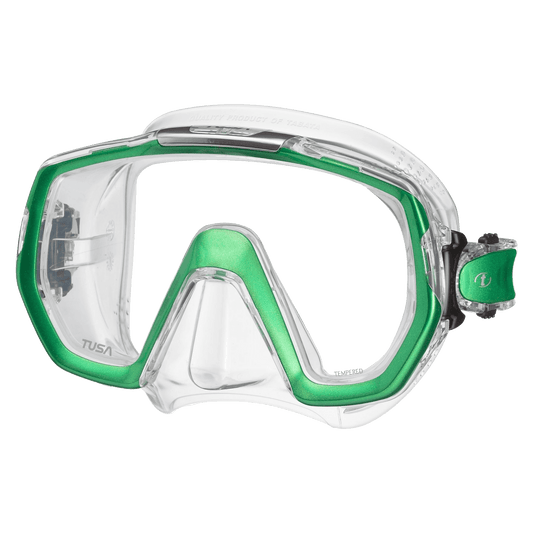
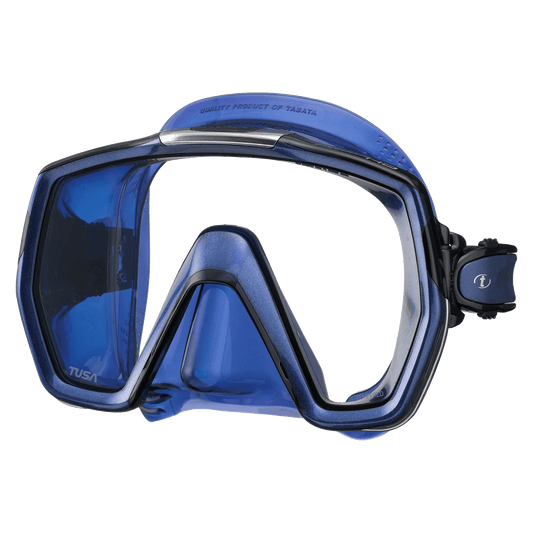
TUSA Freedom CEO M-212
6. Corrective lenses for a diving mask
We offer the installation of optical, corrective lenses for all single and double-glazed diving masks. This allows each diver to choose lenses that match their visual impairment. The use of correction means that everyone can enjoy excellent visibility underwater. If you have a visual impairment, consider buying a mask with corrective lenses.

Diving mask lenses with corrective lenses installed
7. Diving Mask Care
To ensure your diving mask lasts for many years, you need to take proper care of it:
- Rinse your mask with fresh water after each dive.
- Store the mask in a cool, dry place, away from sunlight and heat sources.
When choosing a diving mask, keep these steps in mind to find a model that will keep you comfortable and safe while diving.
Payment and shipping
Safe shipping of products, within Europe, is one of our priorities. We make sure that our goods are delivered in the fastest and safest possible time. Our company cooperates with reputable courier companies that offer tracking services and insurance. Thanks to this, you can be sure that your order will reach you intact and on time.

Shipping methods
Prices (gross) for shipments - Poland :
Regular price Courier 18,00 PLN
Regular price Delivery to point/machine PLN 14.00
Shipping prices (gross) - Europe :
Regular price Courier 50,00 PLN
Payment Methods
Fast transfer: Payment for your order via fast online transfer, BLIK, payment card via tpay, availability of payment methods depends on location.
Return Policy – How do I return a product?
We want your shopping experience to be hassle-free! If a product does not meet your expectations, you have 14 days to return it - without giving a reason.
How do I make a return?
✔ Inform us – Send a statement of withdrawal from the contract. You can do this:
- by email
- traditional mail
You will receive confirmation of receipt of your application from us.
✔ Pack the product - Make sure it is in the same condition you received it. Remember that if it has been used beyond standard inspection, we may reduce the refund.
✔ Send the parcel back – You have 14 days from the moment you report the return. You cover the shipping costs. Our address:
optykTECH | maskinurkowe.pl
Szybowcowa 23, 54-130 Wroclaw, Poland
✔ Expect a refund - We will refund your payment within 14 days of receiving your package. You will receive your money back via the same method you paid for, unless we agree otherwise.
✔ When is a refund not possible?
Unfortunately, we cannot accept certain products if:
- they were made to special order,
- are sealed for hygiene reasons (e.g. lenses) and the packaging has been opened,
- spoil quickly or have a short shelf life,
- were inseparably connected to another product after delivery.
If you have any questions, please contact us – we will be happy to help!
-
Freedom Ceos M-212
Vendor:TusaRegular price €196,20Regular price€79,49Sale price €196,20 -
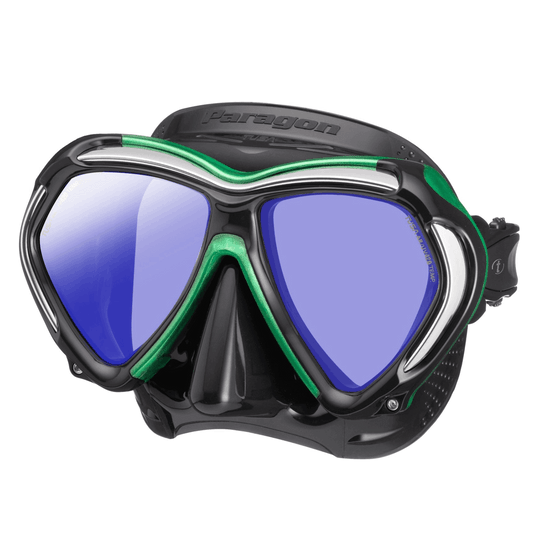
Paragon M-2001 SQB
Vendor:TusaRegular price €318,49Regular price -
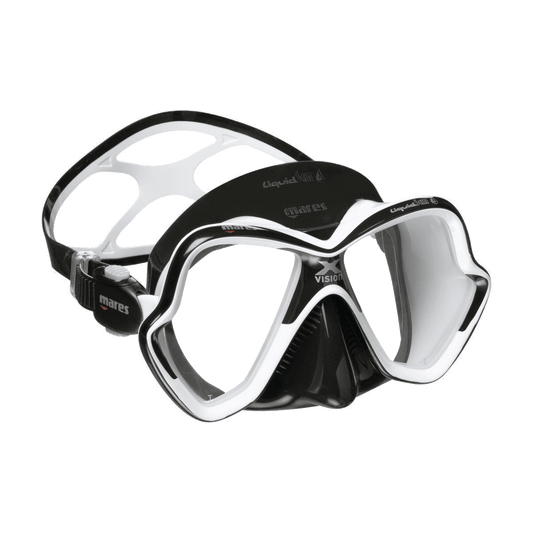
Mares X-Vision ULTRA LS
Vendor:MaresRegular price €209,49Regular price -
Tusa Integra M-2004
Vendor:TusaRegular price €212,15Sale price €212,15 -
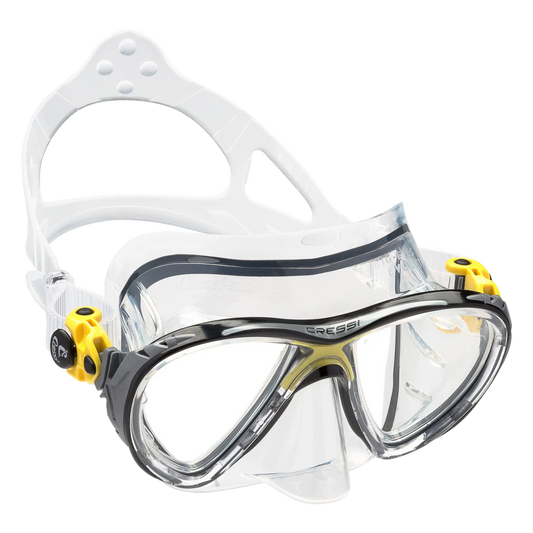
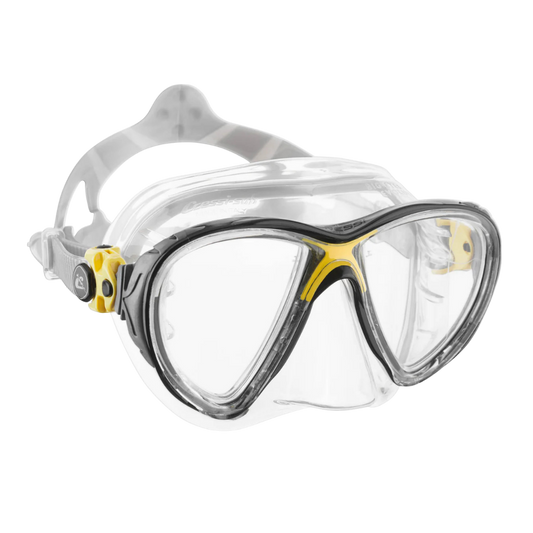
Cressi Big Eyes Evolution
Vendor:CressiRegular price €172,27Regular price -
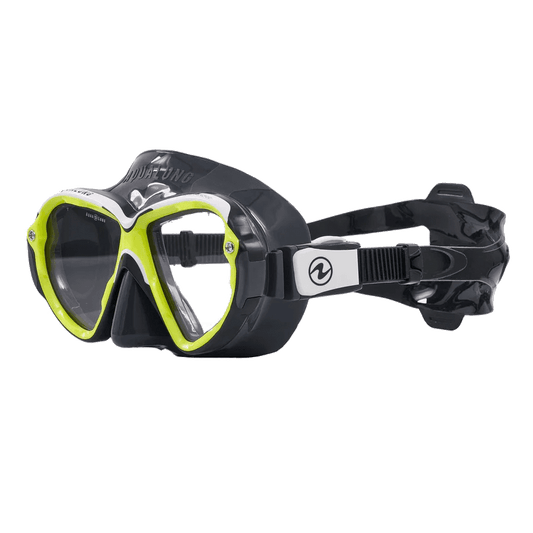
Reveal UltraFit
Vendor:AqualungRegular price €201,52Regular price -
Tusa Freedom Elite M-1003
Vendor:TusaRegular price €196,20Regular price -
Tusa Zensee M-1010F
Vendor:TusaRegular price €222,79Regular price -
XDEEP Radical
Vendor:XDEEPRegular price €191,15Regular price -
Tusa Freedom HD M-1001
Vendor:TusaRegular price €201,52Regular price -
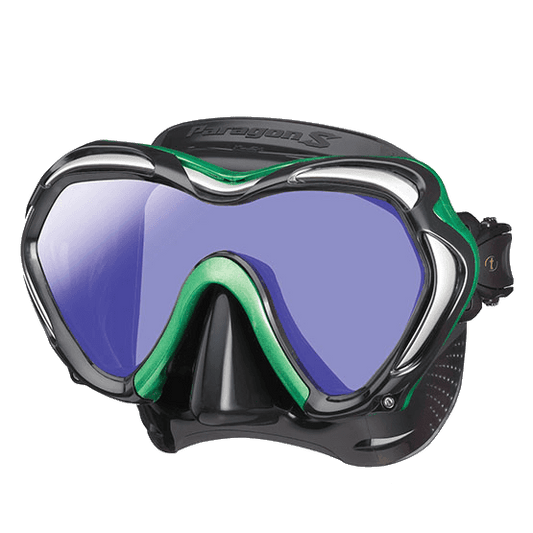
Tusa Paragon S M-1007 SQB
Vendor:TusaRegular price €318,49Regular price -
Tusa Freedom Tri-Quest M-3001
Vendor:TusaRegular price €201,52Regular price -
Cressi Big Eyes Evolution Cristal
Vendor:CressiRegular price €185,57Regular price -
Mares FORCE-X LITE
Vendor:MaresRegular price €196,20Regular price -
TUSA Serene UC-1625QB
Vendor:TusaRegular price €172,27Regular price -
TUSA Splendive UC-7519
Vendor:TusaRegular price €156,32Regular price -
Tusa Kleio II M-111
Vendor:TusaRegular price €158,98Regular price -
Tusa Zensee PRO M-1010S
Vendor:TusaRegular price €254,69Regular price
























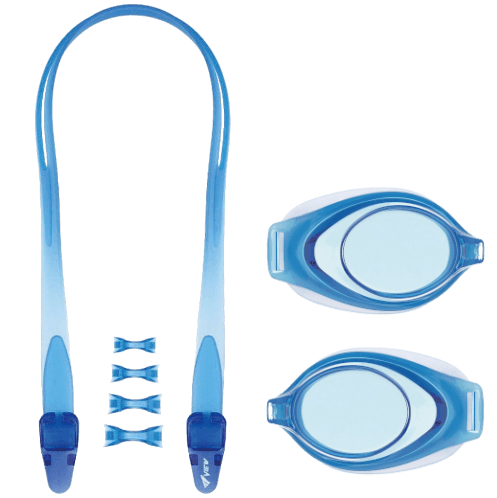
Swimming goggles with vision correction
-
B&S Swimming Goggles
Vendor:Breitfeld&SchliekertRegular price €66,20Regular price -
B&S Coral Swimming Goggles
Vendor:Breitfeld&SchliekertRegular price €79,49Regular price -

 Out of stock. Inquire now.
PROGEAR H2O
Vendor:PROGEAR EYEGUARDRegular price €106,08Regular price -
View Prescription swimming goggles (6-12 years)
Vendor:ViewRegular price €31,11Regular price -
View Swipe Swimming Goggles
Vendor:ViewRegular price €39,08Regular price




-
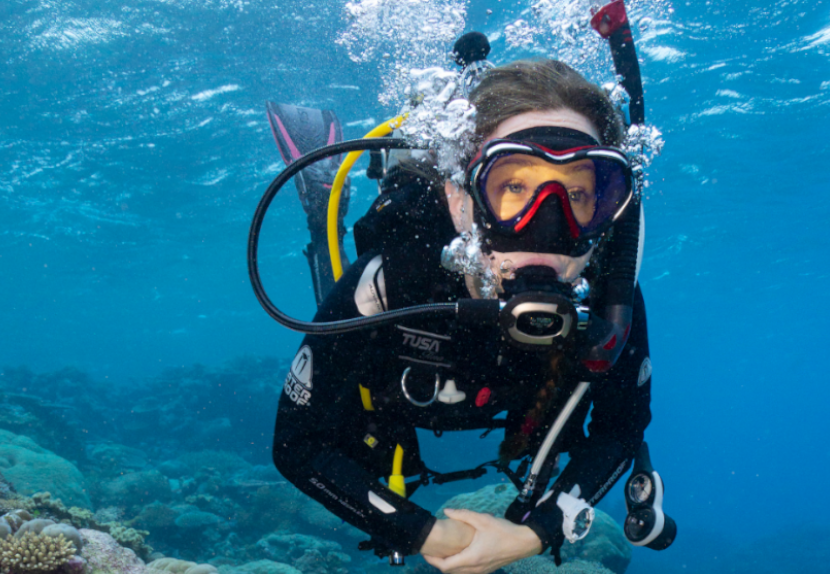
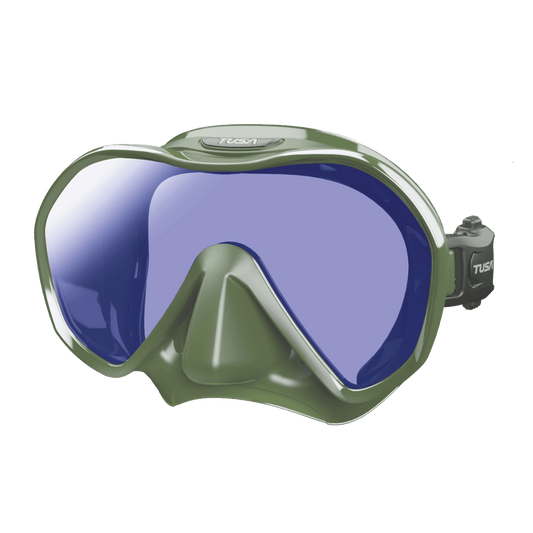
Tusa diving masks
TUSA diving masks - Advanced technology and precise fit Discover our selection...
-
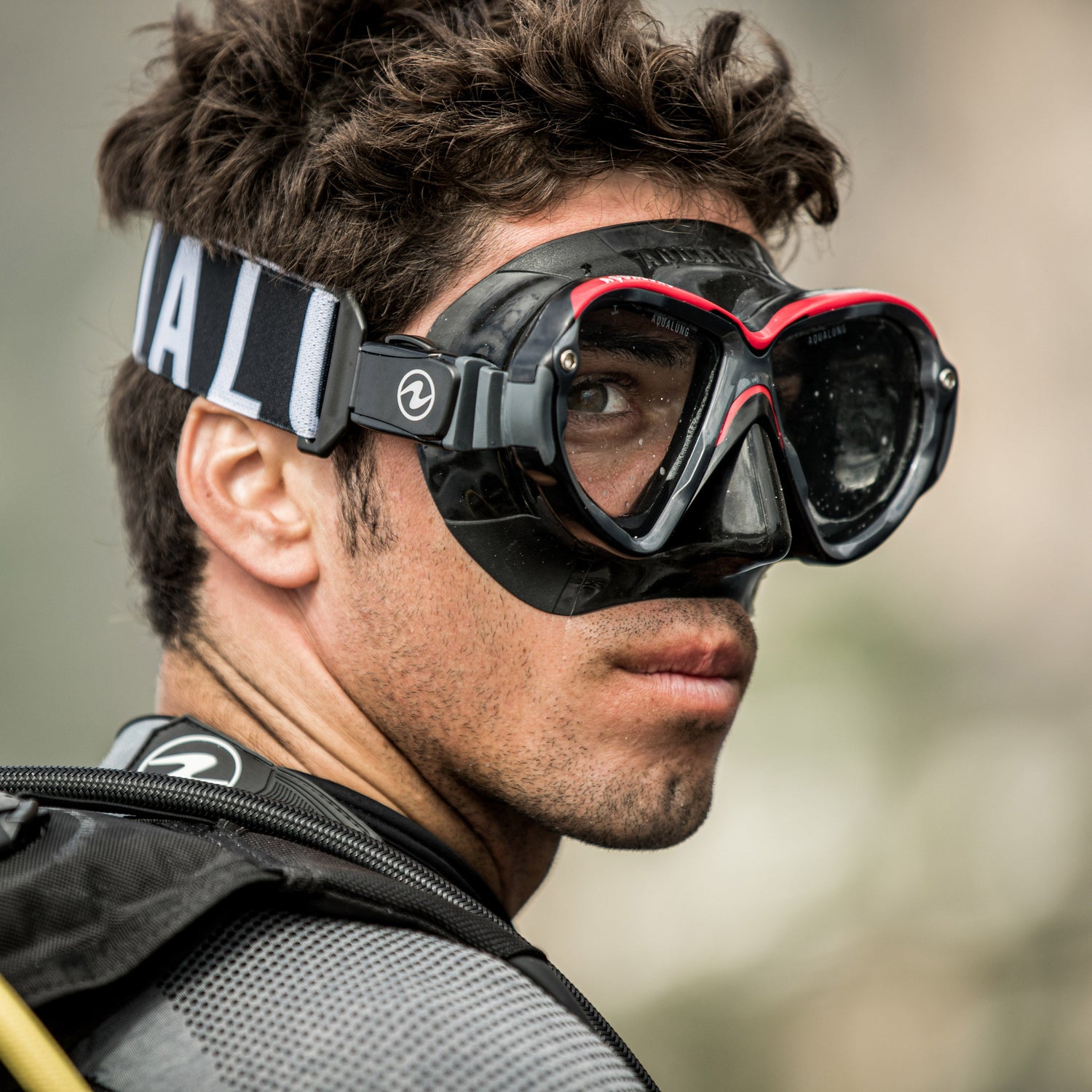
Aqualung diving masks
Aqualung diving masks – precision, comfort and the possibility of mounting corrective...
-
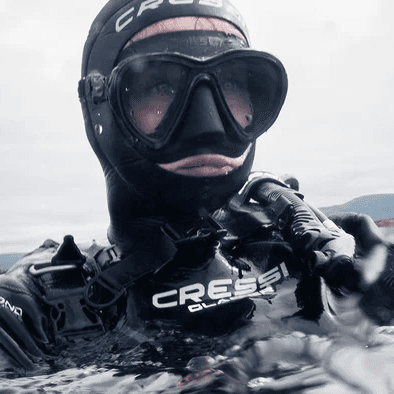
Cressi diving masks
Cressi Diving Masks – Italian precision, comfort, and the option for corrective...
-
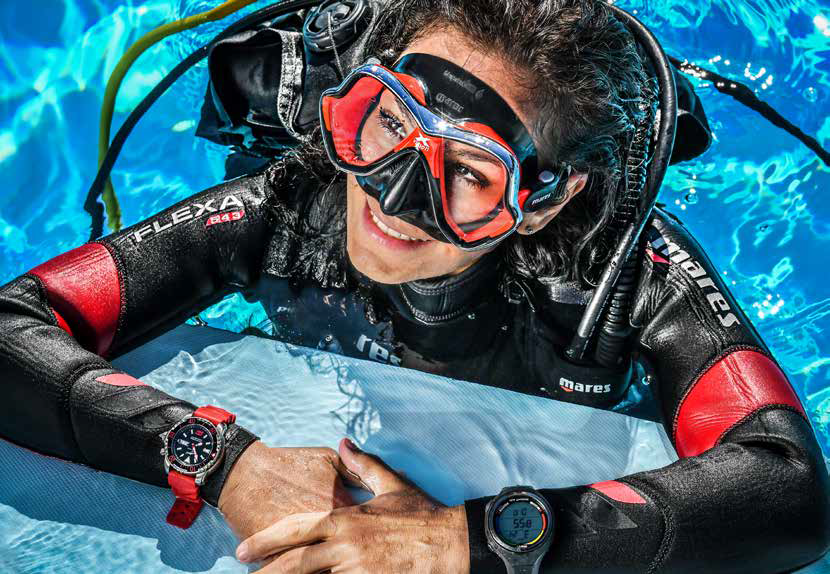
Mares diving masks
Mares diving masks – perfect visibility under water with the possibility of...
-
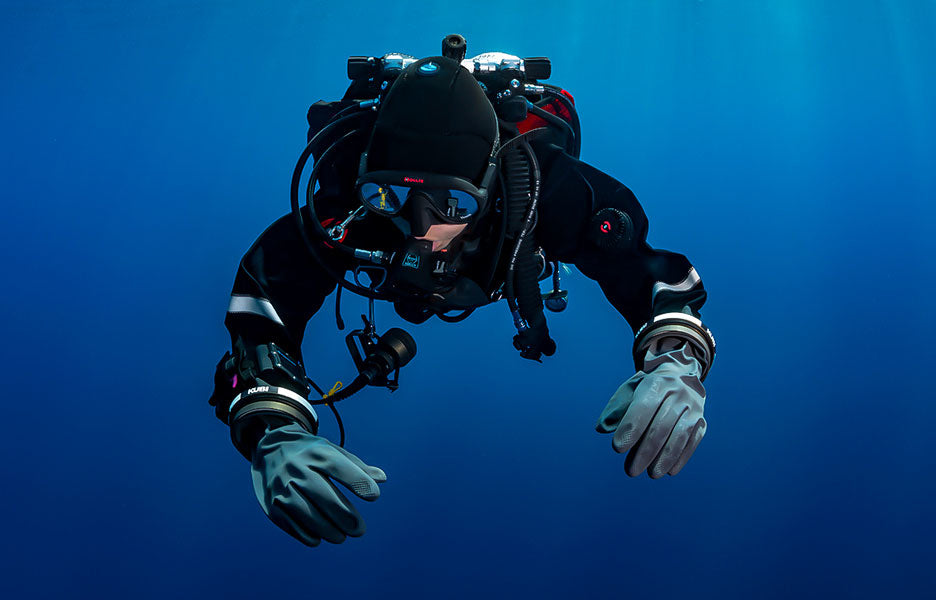
Hollis diving masks
Hollis – no limits, just technique NO LIMIT – it is not...
-
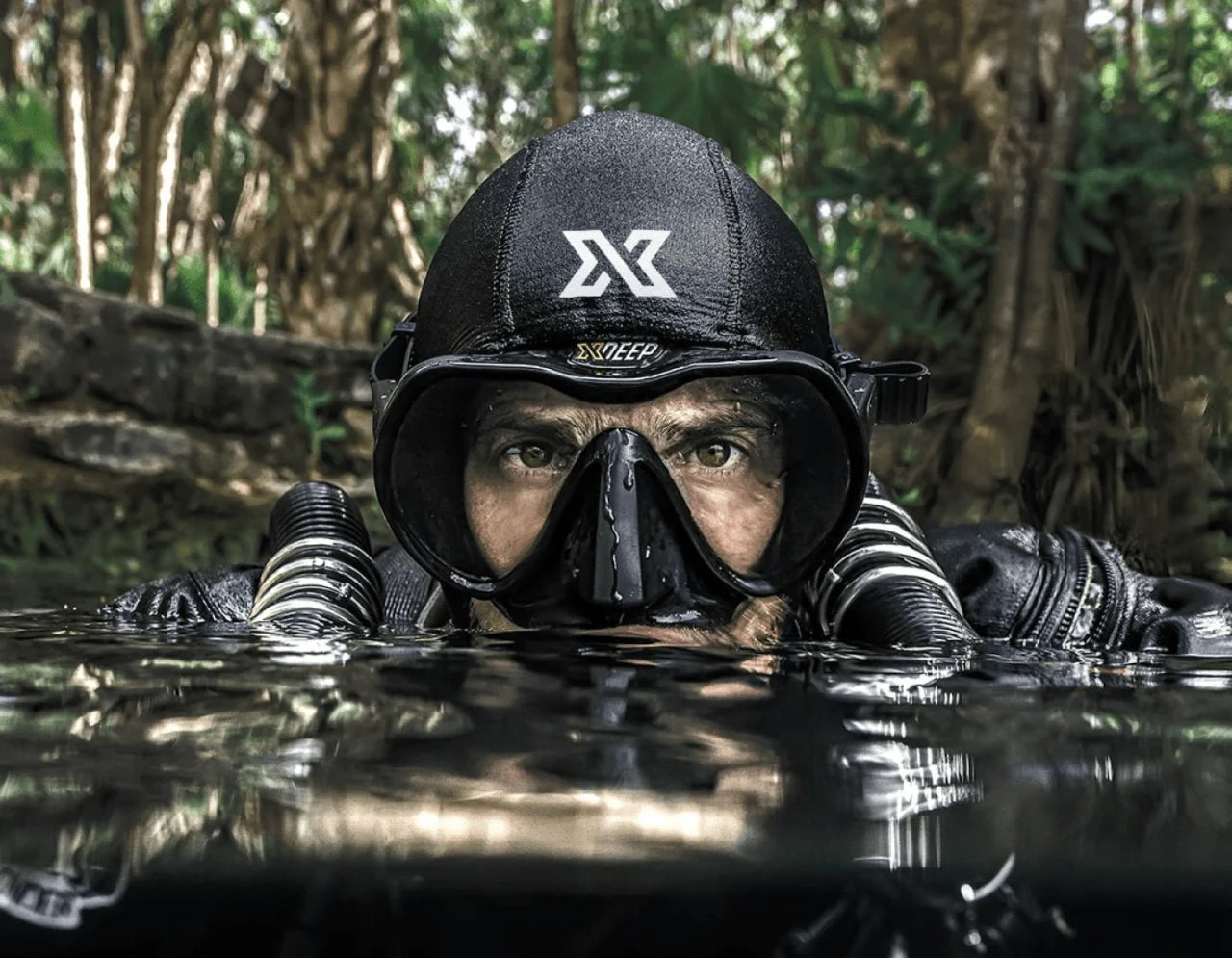
XDEEP diving masks
XDEEP Diving Masks – Innovation and precision underwater XDEEP diving masks are...
-
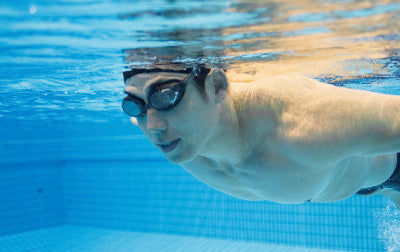
Swimming goggles
Prescription swimming goggles – clear vision during any water activity Corrective swimming...
-
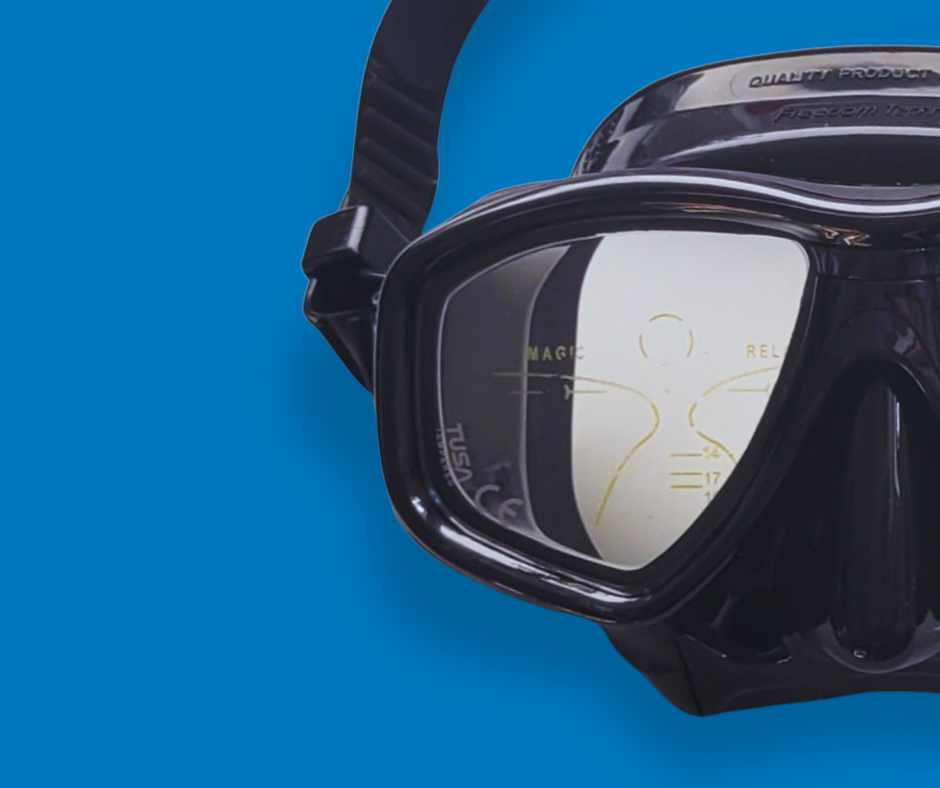
Corrective lenses for diving masks
Corrective lenses for diving masks - clear vision underwater thanks to a...
